 Angkor Wat is the largest religious monument in the world, is a UNESCO World Heritage Site, and is rated the world’s number 1 site to visit by Lonely Planet. It has also been at the top of my travel bucket list since I first started the list. The famous view of Angkor Wat is recognisable to many, although what most people perhaps do not realise is that Angkor Wat is only one temple amongst over 1,000 in the Angkor area. Thus a visit here actually involves far more than just Angkor Wat alone!

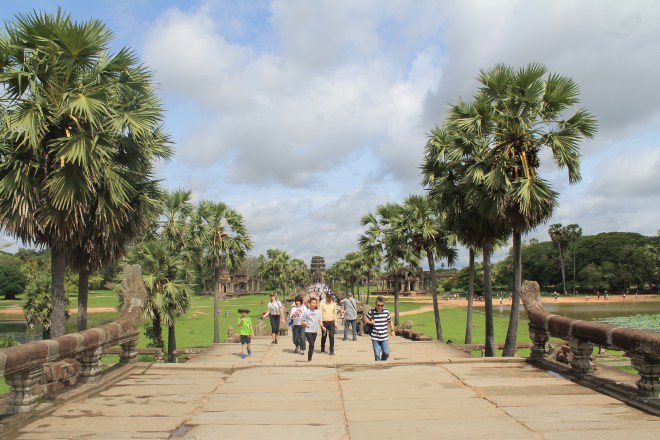
Angkor was the Capital city of the Khmer Empire between the 9th – 15th centuries. During that time it was the largest pre-industiral city in the world, believed to have housed up to a million inhabitants. Over 1,000 temples were built in this area, ranging in size from what are now simple piles of brick rubble to the most famous landmark in Cambodia – Angkor Wat. A number of the temples here have been restored, and the area now houses the greatest site of Khmer architecture. Even if the history of the site doesn’t particularly interest you, I dare anyone to visit this location and not leave feeling amazed.


As I have already mentioned, Angkor Wat is, for many, the only known temple of this site. At 402 acres it is the largest religious monument in the world, and is truly spectacular. Built in the early 12th century it was originally a Hindu temple, but was converted to Buddhism at the end of the 12th century. Unsurprisingly, it is absolutely swarming with tourists from opening to close. It’s actually possible to do an early morning trip to view the temple at sunrise, but unfortunately the weather forecast was so bad when we were there that we decided against it. (Something new for my bucket list!) For me, reaching this temple gave me the same feeling as viewing the Colosseum in Rome for the very first time. It’s such a famous historical site, and as an Ancient Historian those always make me excited! To view something you have thought of for so long, and for it not only to live up to those expectations but to exceed them is one of the most amazing things ever. This was quite possibly one of the best days of my entire summer.

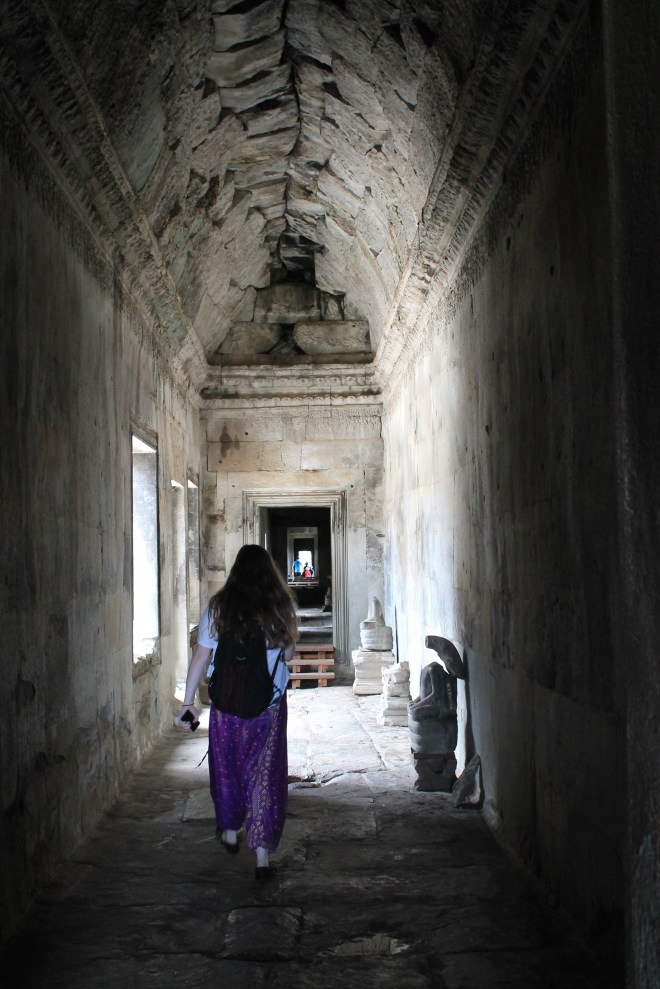
Since there are such a huge number of temples at Angkor seeing even a small percentage of them is impossible. Personally I would recommend aiming to see five at the most, as this allows you enough time to explore the temples properly, but without getting too sick of them! The number one choice is, pretty obviously, Angkor Wat!

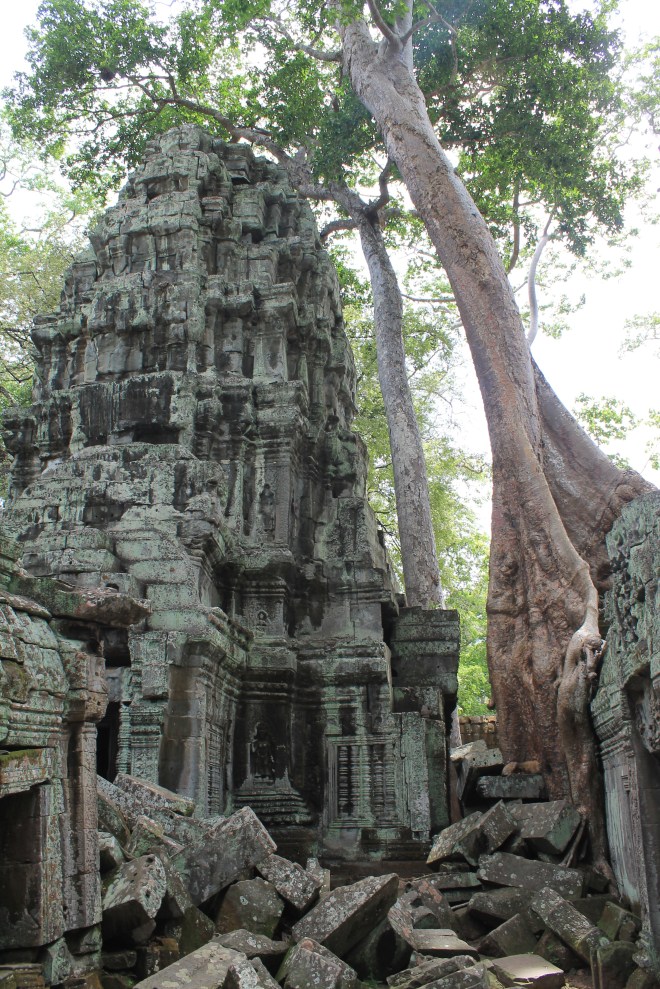
My second recommendation would be Ta Prohm, which is also referred to as the Indiana Jones Temple. The temple was built in the late 12th and early 13th century as a Mahayana Buddhist monastery and university, and is one of the few temples in the complex that has been left virtually untouched from the way that it was first found. The atmosphere created by the overgrown nature of the temple has made it incredibly popular, and is in fact one of the most visited temples in the complex. Walking around here was a strange mix of amazement and continuous goosebumps. In some ways this temple truly does feel as though it’s a film set rather than a real religious site, I half expected to see Harrison Ford running out of the jungle at any moment! Although Angkor Wat was truly spectacular, I think that this may have actually have been my favourite temple out of the ones we visited.


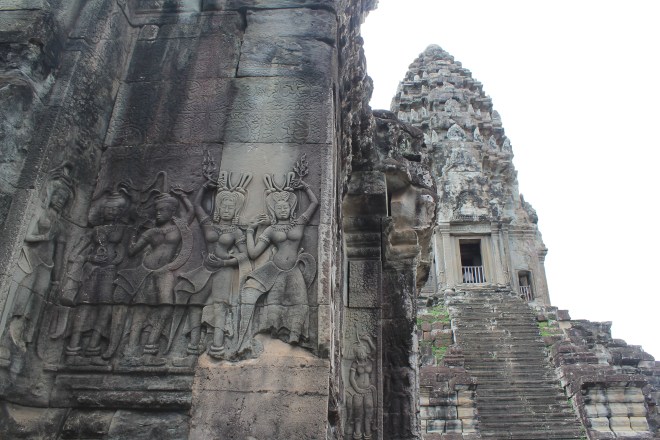
I would then recommend going to see Angkor Thom. Angkor Thom was the last capital city built during the Khmer Empire in the late 12th century. Along with the Bayon temple (which I’ll mention later) it is particularly famous for the towers each decorated with four huge faces. They are stunning to see, and when up close to them you realise how incredibly detailed they actually are. Entering the site itself is equally as impressive, as the causeway of the South Gate is flanked by 54 gods and 54 demons, apparently depicting a popular Hindu legend ‘The Churning of the Ocean of Milk.’ For us this site was made even better by the procession of elephants we passed!


My fourth and final recommendation is Bayon temple. Like Angkor Thom this temple is famous for its huge stone faces, although here there are over 200 facing in every direction! Historians aren’t entirely sure who is depicted in these faces, although it is speculated that it may be King Jayavarman VII – the ruler who built both Angkor Thom and Bayon temple, or perhaps a mixture of the ruler and Buddha. Bayon was also built in the 12th century as part of the King’s expansion of his capital Angkor Thom and the Bayon can be found at the exact centre of the city. Like Angkor Wat this site is absolutely swarming with tourists trying to get the perfect photo. It’s also incredibly easy to get lost within the complex and trying to locate the rest of your group is surprisingly difficult – as I personally learnt! But there’s something spine tingling about this site, and I am so pleased that we decided to see one more site before we headed home for the day.


 Well there you have it, my top four recommendations for the Angkor complex! Admittedly I only saw the four temples mentioned in this post, but we found that more than enough for one day. You can get a two day pass for the site but personally I think that for many that may be a bit too long visiting temples! This was one of the best days of my entire trip, and is somewhere I think everyone should try and visit at least once in their lives. Lonely Planet is definitely on to something listing it as the number one place to visit in the world!
“We travel, initially, to lose ourselves; and we travel, next to find ourselves. We travel to open our hearts and eyes and learn more about the world than our newspapers will accommodate. We travel to bring what little we can, in our ignorance and knowledge, to those parts of the globe whose riches are differently dispersed. And we travel, in essence, to become young fools again- to slow time down and get taken in, and fall in love once more.” Pico Iyer
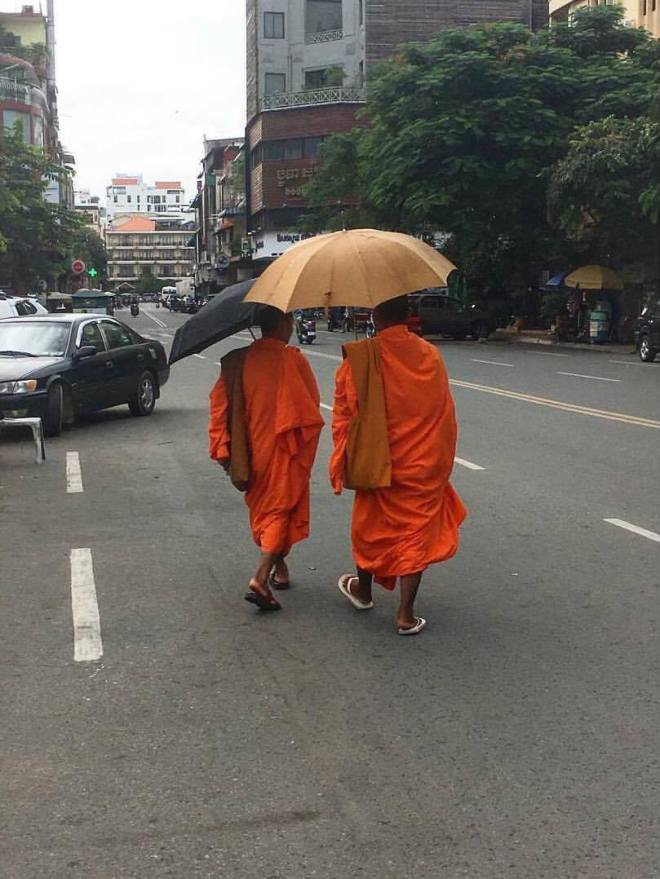 Our journey into Cambodia began with a rather long bus ride from Vietnam, which ended in Phnom Penh – a name which I still find absolutely impossible to say correctly for some strange reason. Phnom Penh has been the capital of the country since the French colonisation, and in the 1920s was referred to as the “Pearl of Asia” as it was believed to be one of the loveliest French-built cities in Indochina. Some of the French styled buildings can still be seen within the city, mixed together with the more traditional architectural styles which make it a truly intriguing place to visit.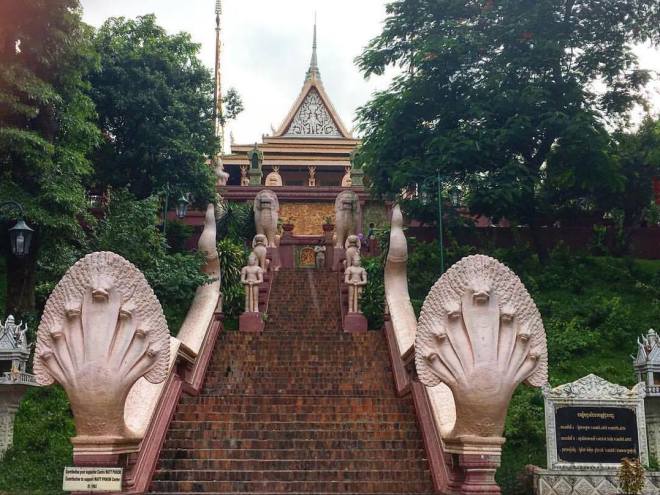
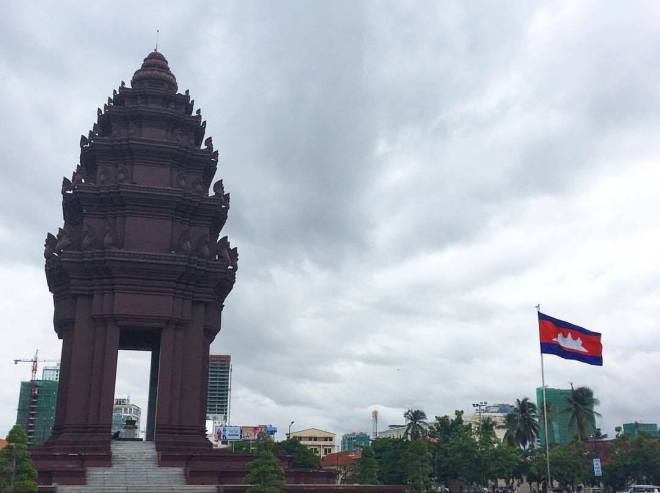
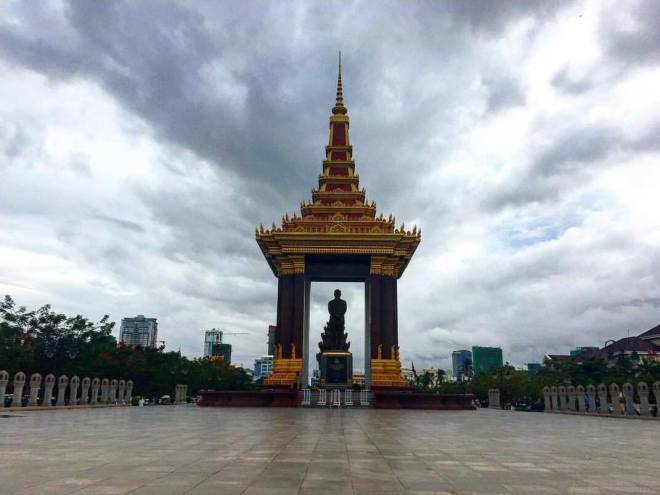







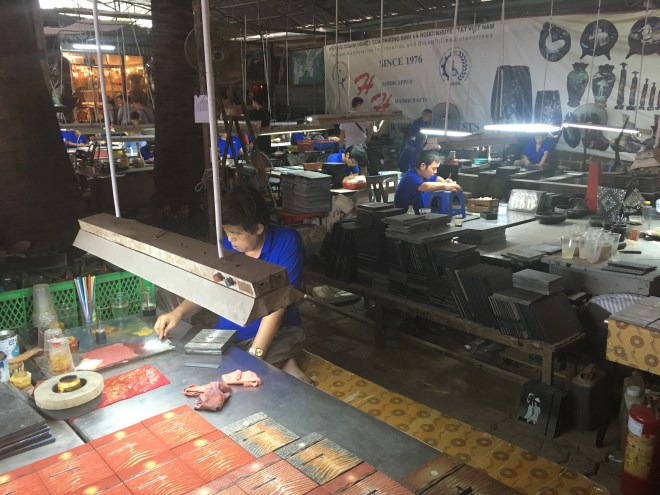
 After some time to look around and shop we were put back onto the bus and taken to the tunnels. At Củ Chi 75 miles (121 km) worth of tunnels have been preserved and turned into a war memorial park. It’s actually possible to crawl through the tunnel system, although it’s amazing to realise that these tiny little tunnels have actually been enlarged to better suit Western tourists! (I dread to think how small they must have been previously). A word of warning, if like one of our group you’re not a fan of small spaces, don’t go down there. Whilst you’re not in the tunnels for a particularly long period of time it is small, quite dark despite the lighting, and incredibly hot!


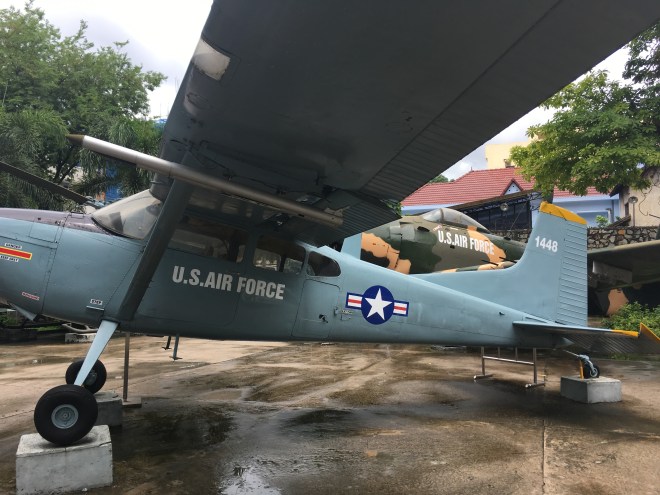
 When you first enter the compound you come across equipment from the period including tanks and a variety of airplanes. In one corner there are even a number of unexploded weapons – although thankfully with their charges and fuses removed! As you explore the museum you find it is organised into different themed rooms, each filled with photos and short explanations of what the images show.
  A warning before you visit this museum, some of the images on show are very graphic. For example, there are rooms documenting the use and effects of Agent Orange and other chemical sprays, napalm and phosphorus bombs. There are images of the war itself, and of the descendants of those involved who have been crippled by exposure to these chemicals. There are even exhibits such a guillotine used by the French and South Vietnamese to execute prisoners and jars of preserved human fetuses believed to have been deformed by the chemicals already mentioned.
 As it turned out, this was one of the best choices we made of the trip! We started off our ‘treatment’ by visiting the mud baths. Now a little part of my brain was being very British and was wondering how many people would have shared the same mud as me. Would I be sitting in mud that had just been congealing there for the last month? Would I be essentially relaxing in things other that mud?!?! But never fear! I watched in delight as, once the group before us left, the mud was drained away, the ‘bath’ washed down with clean water and refilled with new mud! So the tiny little anxious part of my brain was quickly put to rest.
 Second surprise of the day was the actual consistency of the mud. Because really, ‘mud’ is the wrong word to use for what we were sitting in. Mud suggests something thick, clumpy. What we were sitting in was more like muddy water. Which I suppose makes sense when you consider that the point is to sit in the sun and let the mud dry and harden. If it was thick and gloopy it wouldn’t cover your body evenly and I suppose would take too long to dry. It was a very funny experience, especially considering the fact that we were supplied with little kiddie buckets which we used to pour the muddy water over each other. The only slight downside to the day was that there was light rain throughout our visit, which meant that we couldn’t dry off in the sun like you’re supposed to. But believe me, at the time we were so happy that we were cool that we couldn’t have cared less!
 Part 2 of the spa trip was to rinse all of the mud off in nice strong showers. Now if you’ve never experienced a mud bath before, I want to let you into a little secret. It doesn’t matter how long you stand in that shower, it doesn’t matter how hard you scrub, you will NEVER get all the mud off you the first time. It simply isn’t possible. Be prepared to see mud in the shower for the next couple of days, even when you thought you were entirely clean! The second part of washing all the mud off was to walk through a small passage like structure that shot out jet streams at you from all angles. Sounds nice right? Nice and relaxing, perhaps it felt like a massage? No. Those jets were strong. And I mean STRONG. Strong enough that we were all shrieking and trying to get through as quickly as possible! Not something I would try for a second time, although admittedly very funny to watch others do.
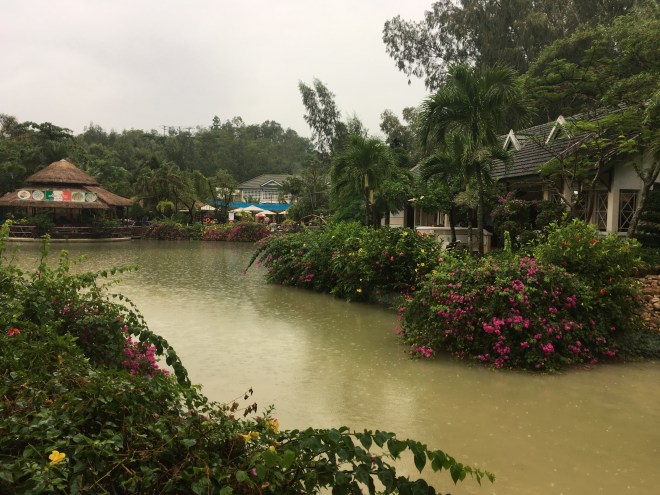 Part 3 of the spa trip was far more relaxing. This part of the day saw us lounging in baths of hot water. As someone who loves a good bath every now and then, this was absolute heaven. It was such a nice feeling to simply lie there and unwind, although slightly strange to be enjoying the heat when normally our days were spent determinedly searching for places with air-conditioning!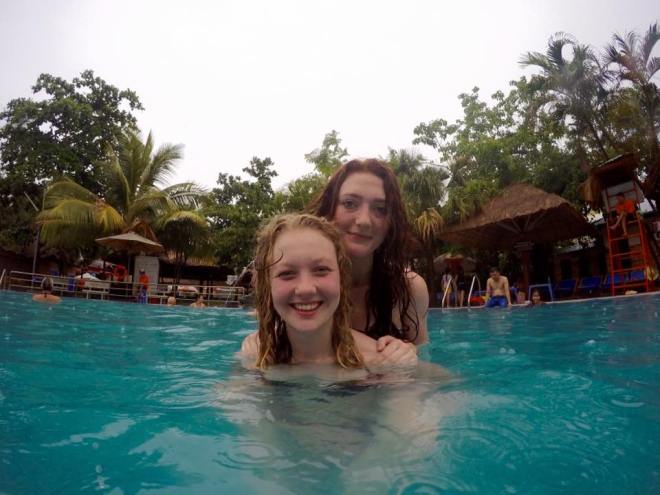
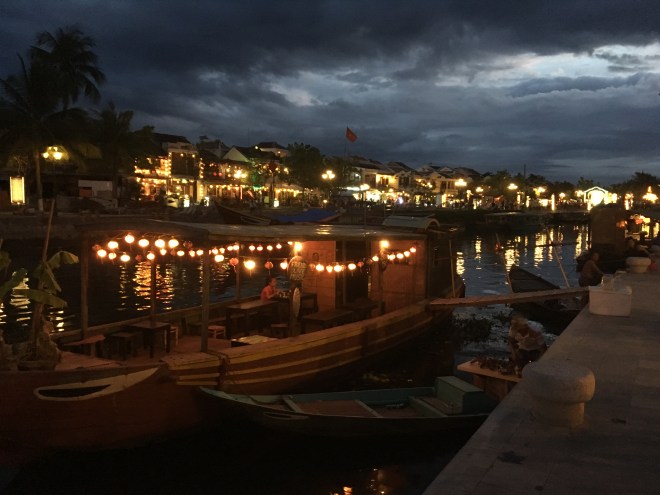
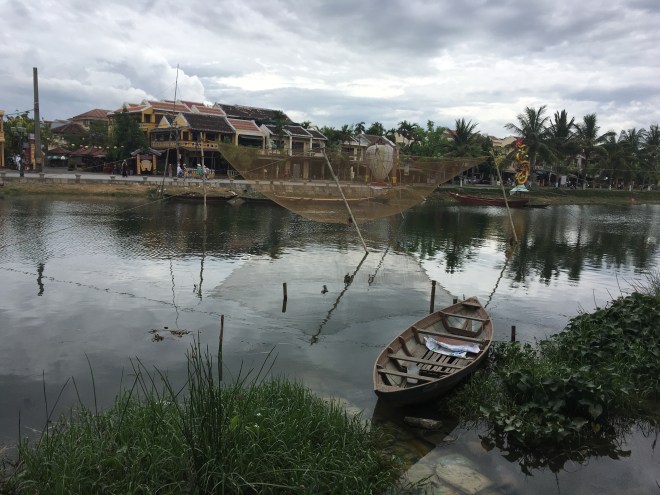
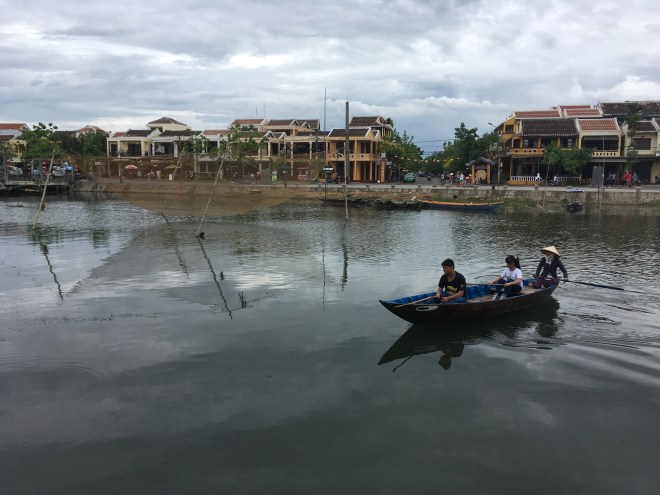

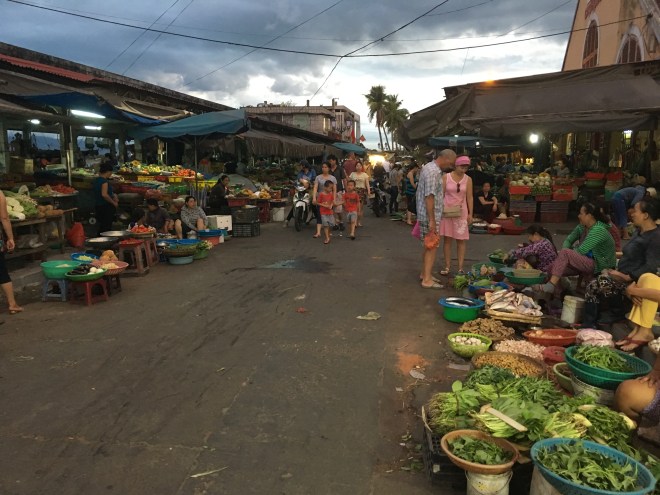

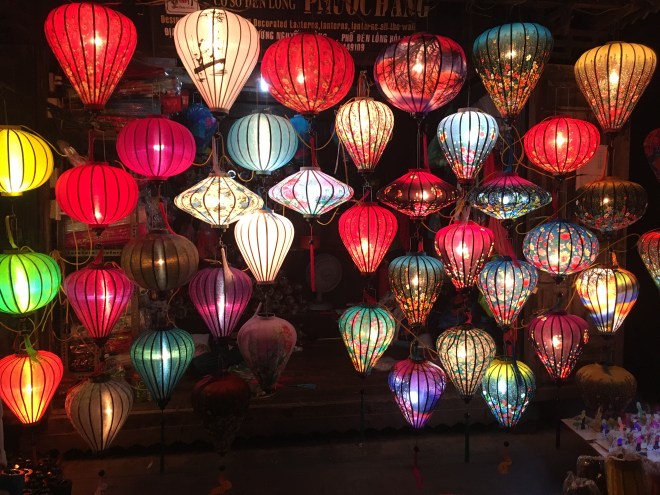
 Hội An is also famous for another, completely different reason – its tailors. Strolling down the streets you will find dozens of shops where you can have clothing custom made in just a matter of days. When I visited Vietnam a few years ago with my family I had a jacket made. I quite literally drew the design I wanted, was measured, picked the fabrics and then within two days it had seemingly magically appeared. However, I would recommend staying in Hội An for at least a couple of days if you’re planning on having anythin made. It’s definitely worth going back for a couple of fittings and making sure that all the details are to your liking. Another option is to send your measurements over along with instructions for what you want. This is exactly what both my parents did whilst I was there this summer, which is how I somehow managed to find myself in a Vietnamese tailors picking out the fabrics for my father’s work suits – not a situation I had imagined myself in when I first started planning this trip!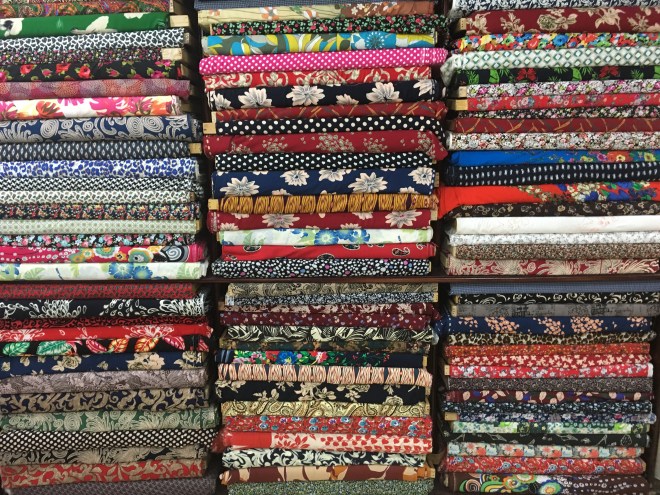





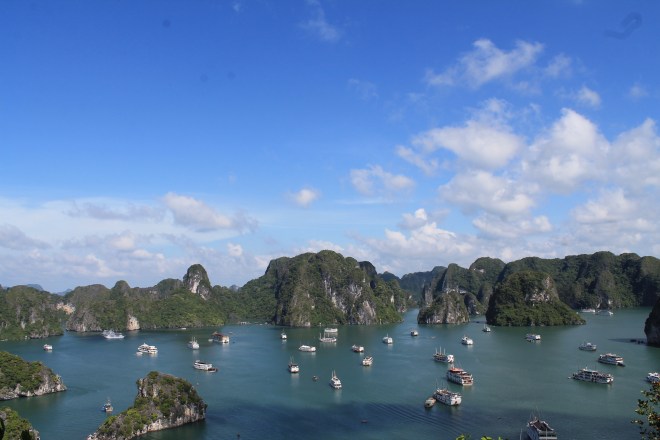 Having been to Ha Long Bay before, I knew that one day there wasn’t really enough time to see this site. There are a huge number of boat trips which pick you up in Hanoi and then allow you to spend one or two nights in the bay on the boat itself. I did a load of research looking at reviews and other travel blogs, and eventually came across ‘Lily’s travel Agency’ which I would absolutely recommend to anybody who wants a reasonable price for this trip. The company offers a small variety of boats for different costs, depending on the size of the boat and the activities included. As a group travelling on a student budget, this was by far the best option we came across.
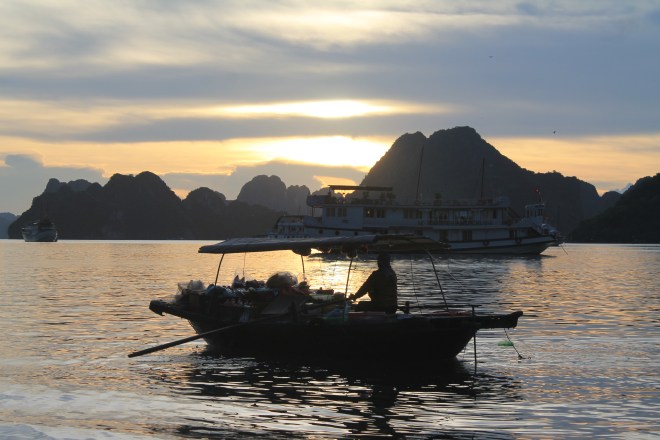
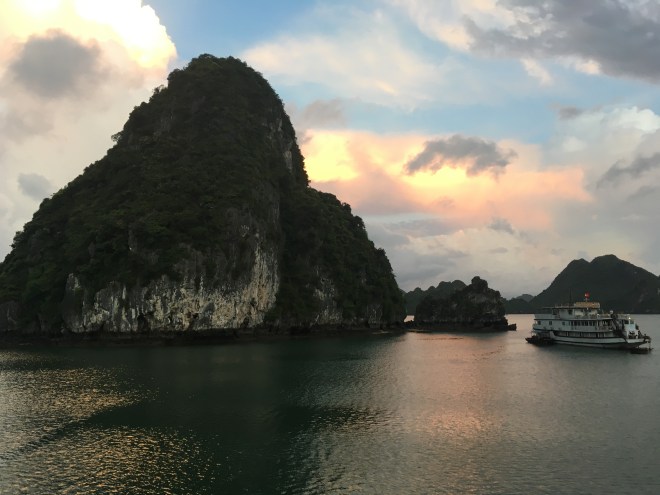
  And so our adventure began! e sailed out into the Bay, and you begin to realise just how many other ships are there as well! I couldn’t help but worry that maybe there would be too many and our experience would somehow be ruined by crowds etc. But in reality, Ha Long Bay is such a large place that you don’t really notice other people in the slightest!
  We were then taken to see a cave complex. The boat provided a tour guide who took us around the caves, explaining what each of the rock formations was called and what it was supposed to look like. It’s amazing to me how many animal shapes can apparently be spotted within one cave! The whole system was lit up with crazy lighting which made it feel as though we were walking through a live action version of ET or some strange alien planet.


 A list of everywhere